

Cloudfox
Turning merchant needs and technical constraints into a coherent product, from live checkout previews to payment recovery.
The challenge
Ten unfinished features, no clear path
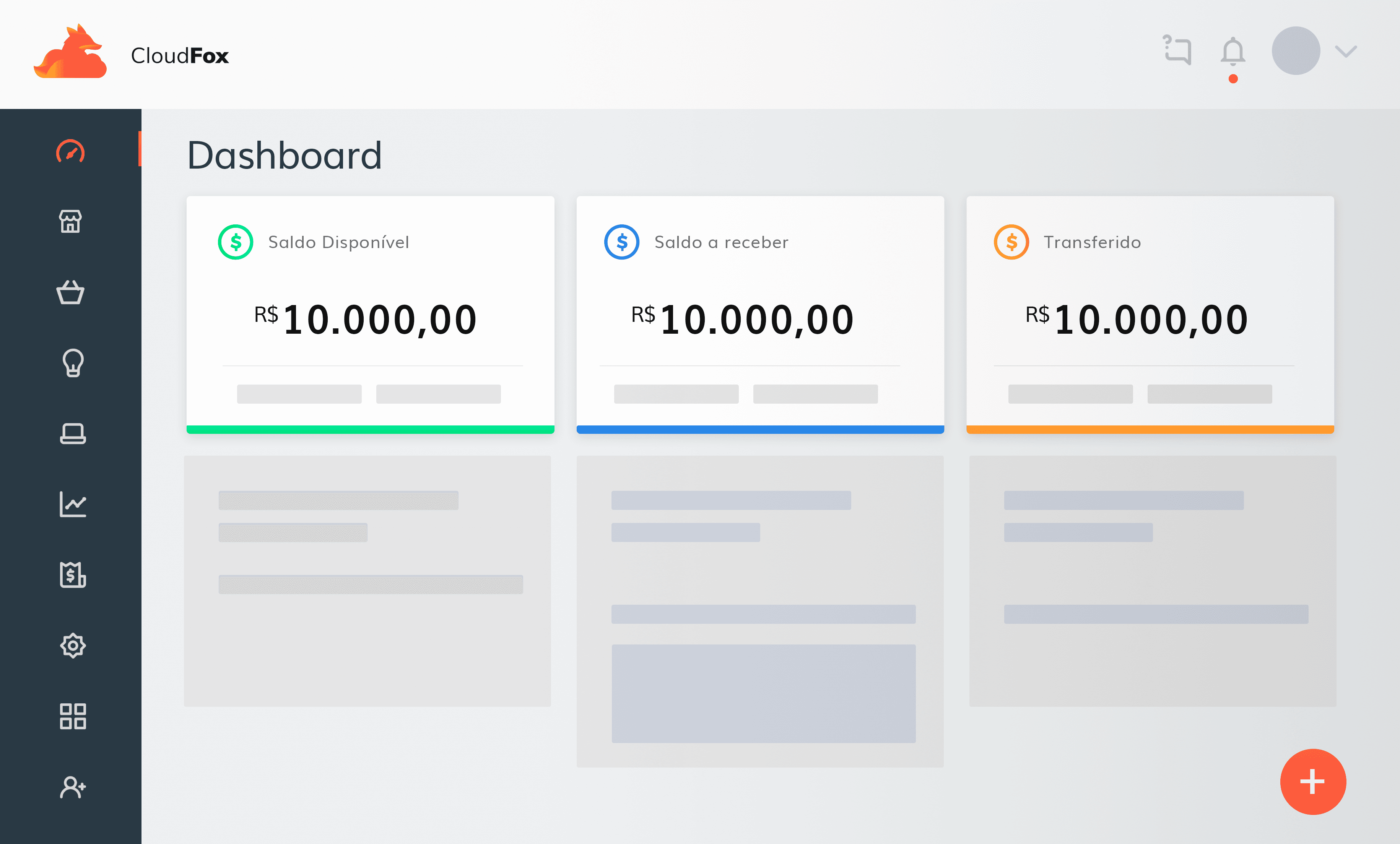
Cloudfox, later acquired by Vega, connected Brazilian merchants to banking, transactions, commissions and financial data. When I joined, the dashboard showed ten features, each at roughly ten percent completion. There was no design system or clear navigation logic.
As the sole designer, without a product manager or design team, I had to turn that broad scope into a product the team could build and merchants could use. Defining what to complete first was part of the design work.
The approach
Sequence the work around three merchant needs
Three jobs became the roadmap: understand the business through analytics, improve revenue through checkout, and manage money through financial tools. That sequence gave the team a basis for prioritising work.
Defining priorities was part of the design role. A focused set of usable capabilities would give merchants more confidence than a broad dashboard of unfinished features.
Checkout editor
Remove the fear of publishing
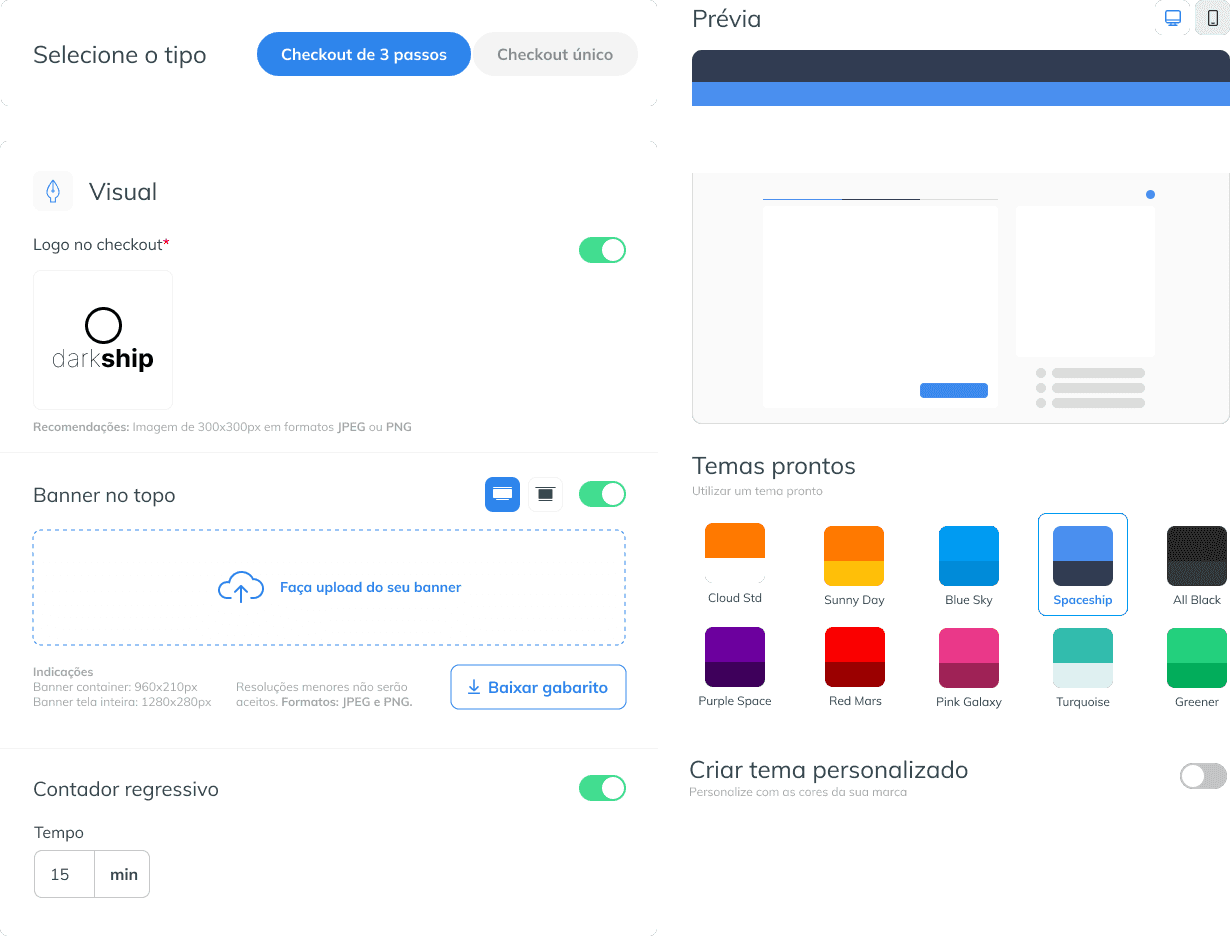
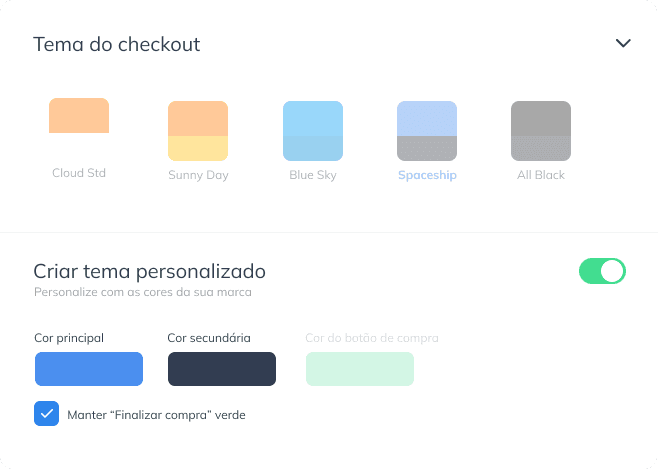
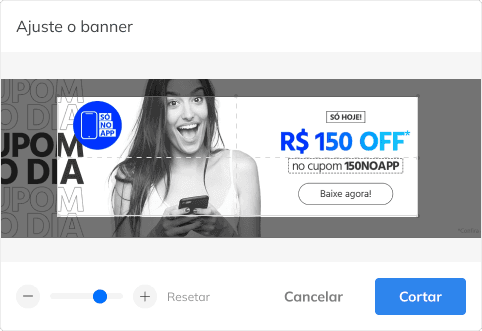
Merchants hesitated to customise checkout because they were afraid of publishing something broken. An editor with a live preview let them see the result as they worked.
Within 60 days of launch, the share of merchants using at least one checkout customisation rose from 18% to 64%. The preview helped merchants feel confident enough to make changes.
Checkout flow
Make each step smaller
We designed the buyer-facing checkout alongside the merchant editor. Contact information came first, enabling remarketing if a buyer left. Delivery details came next to calculate shipping, with payment last.
Progressive disclosure reduced the amount of work presented at each step. Checkout abandonment fell from 68% to 26%.
Recovery
Keep helping after the order
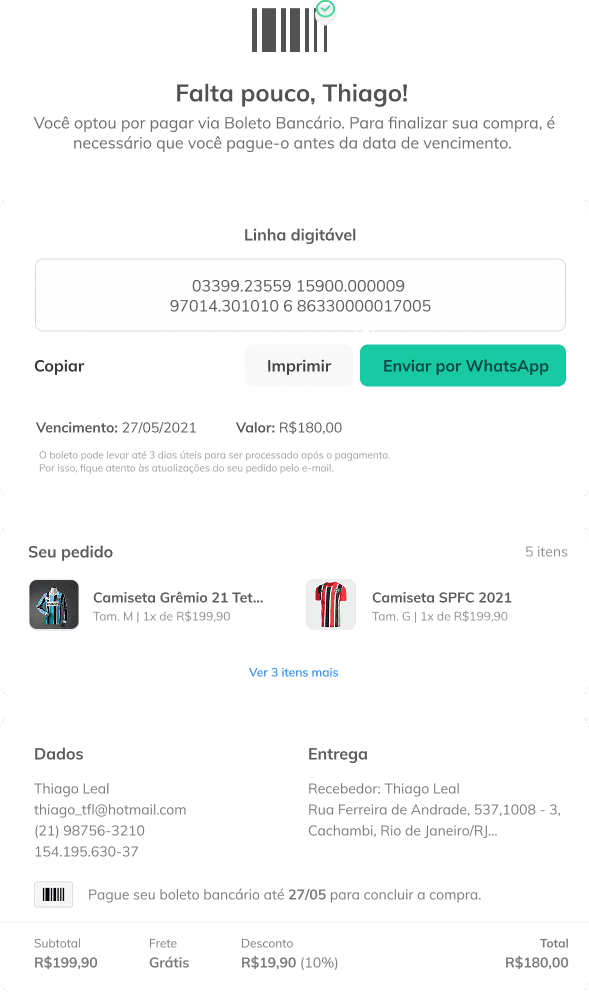
For boleto payments, the confirmation page was also an opportunity to help customers complete payment. In Brazil, boletos are often shared and paid through WhatsApp. The post-purchase changes improved boleto completion by 24%.
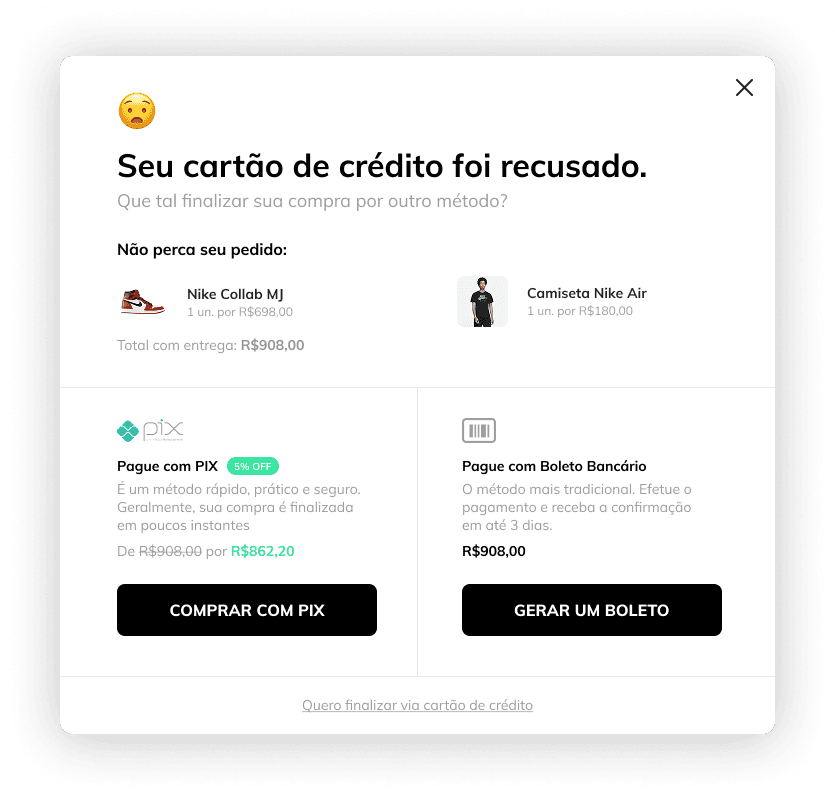
A declined card also needed a useful next step. We offered a 5% discount to complete the purchase with Pix, bringing the reported drop-off rate after the offer from 24% to 12%.
Analytics
Make the important numbers easy to reach
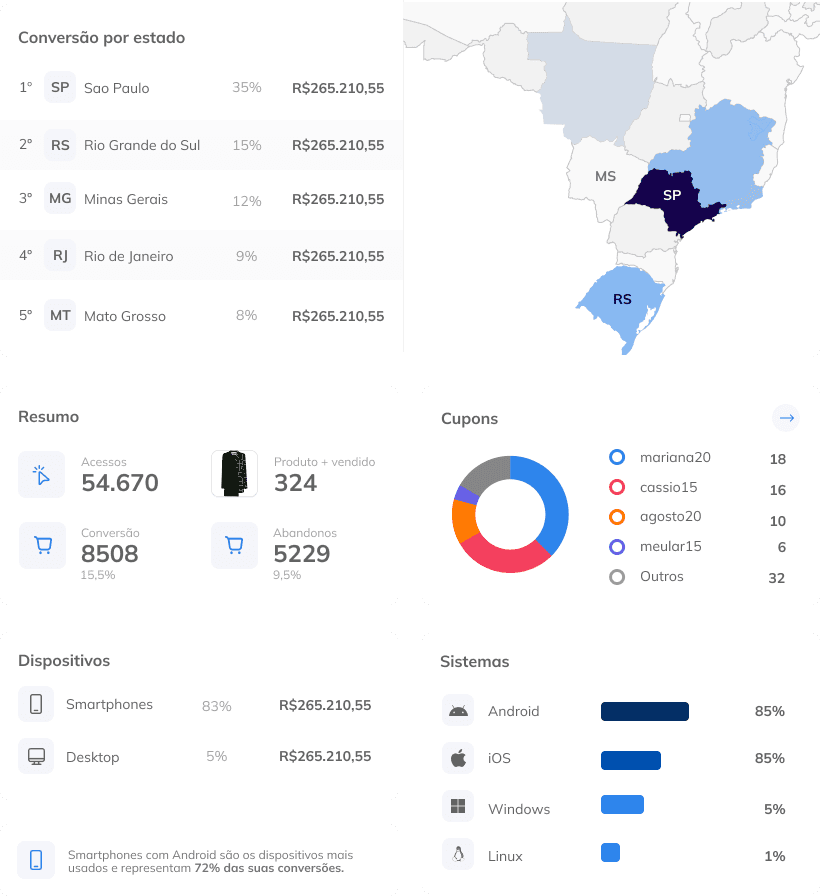
We reorganised reporting into finances, sales and marketing. Each module surfaced its three most important metrics immediately, with deeper analysis available when needed.
The marketing module included geographic information across 26 Brazilian states, matching the way merchants already thought about regions and city rankings. Merchants who used analytics in their first week showed higher retention in the published case study.
Collaboration
A direct line to the people making decisions
The work was shaped with the CEO, Tech Lead and CMO through weekly conversations about scope, assumptions and priorities. The CEO represented merchant needs, the Tech Lead defined what was feasible, and the CMO brought the brand perspective behind white labelling.
I translated those perspectives into priorities and interactions that could work together. The product needed to be feasible to build, clear to operate and useful when a payment or a configuration did not go as planned.