

Factorial
Designing the shared structure, inheritance rules and interactions that let HR teams configure once and automate recurring work.
The challenge
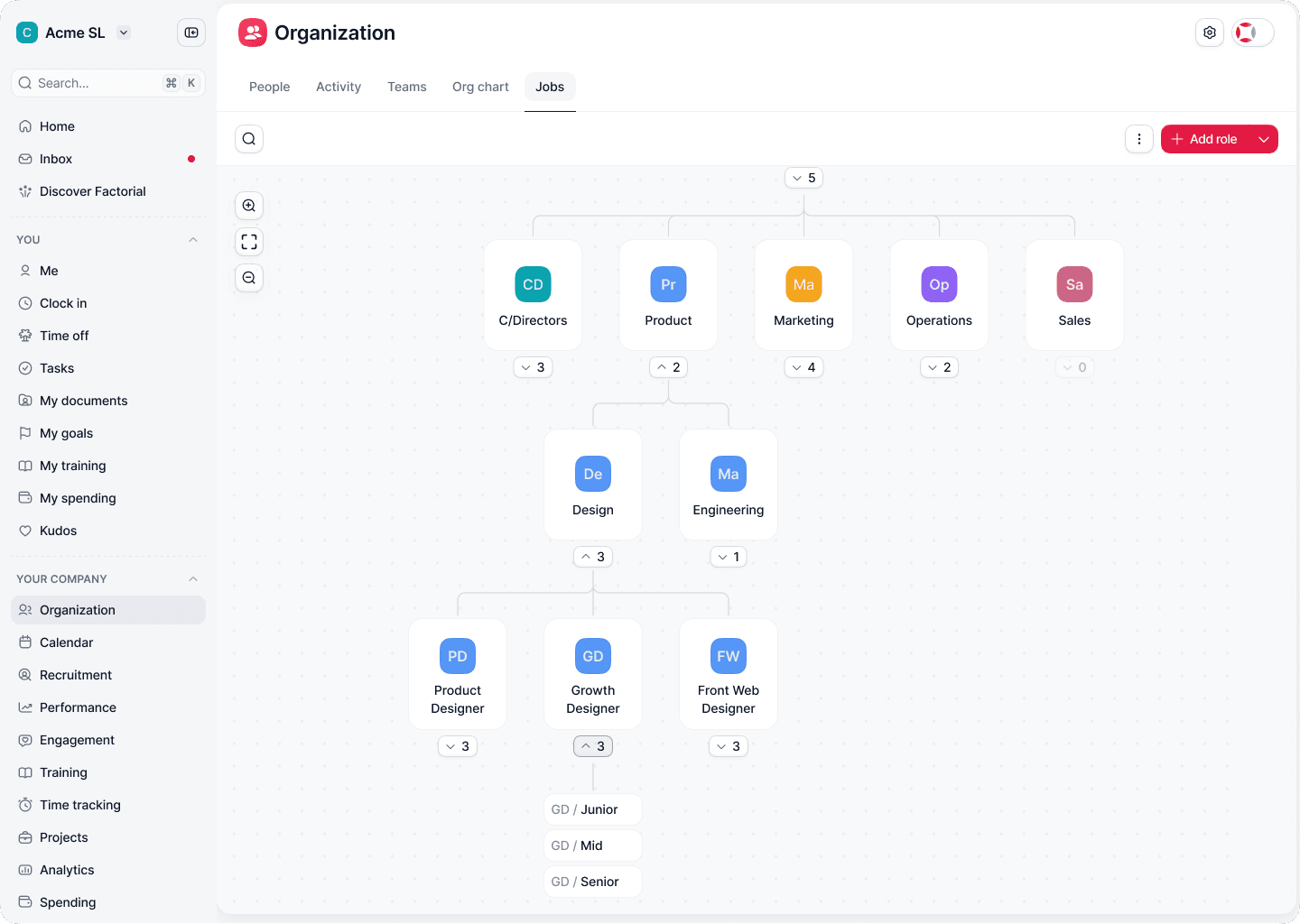
The structure had outgrown the product
As Factorial moved into larger organisations, its model could no longer consistently represent job architectures, competencies and career frameworks. Adding more settings would give HR teams more work without resolving the underlying structure.
I worked with Product and Engineering to connect the way companies describe their organisation with the way the platform represents it. Workshops, customer interviews and support insights showed where those two models broke apart: real reporting structures were hard to represent, setup was manual, and the work multiplied with headcount.
The approach
Give automation a structure people understand
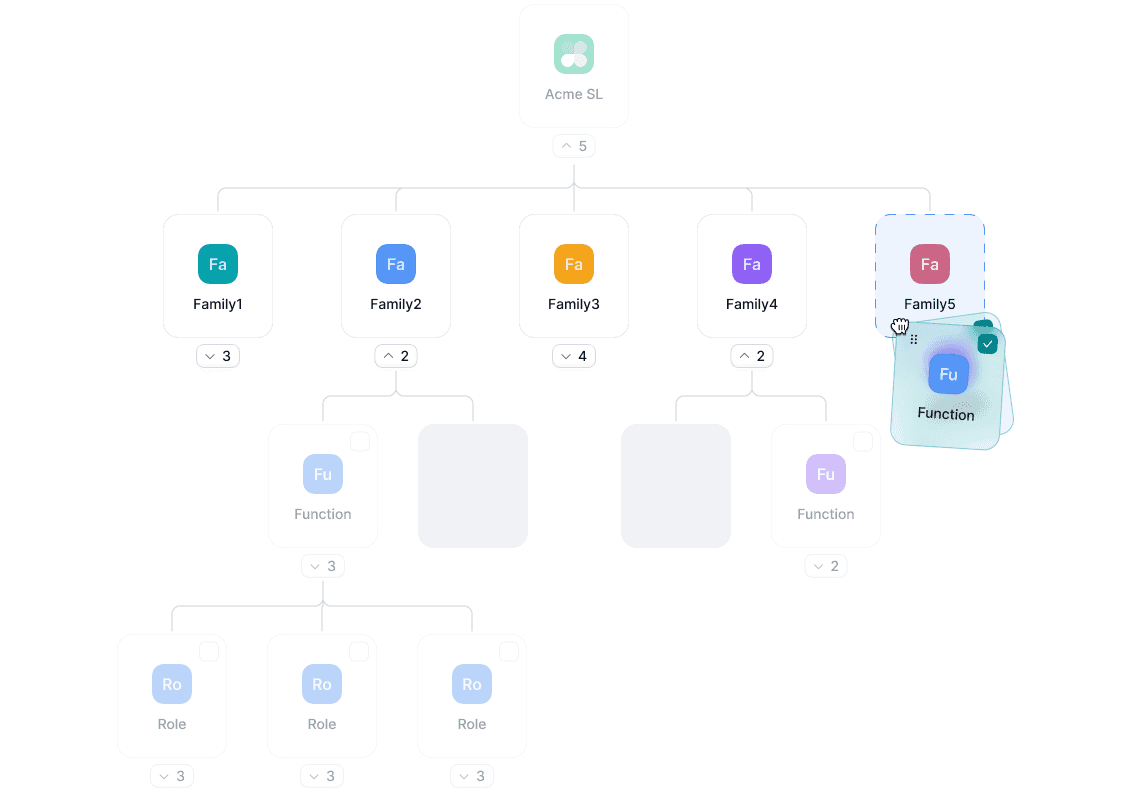
The Job Catalog became a three-tier model: Families → Functions → Roles. Configuration flows down through the hierarchy, so a condition defined once can apply to existing roles and future ones.
My design work covered both the structure and how people would use it. The model had to serve several HR products, preserve enterprise flexibility and make the consequences of a change understandable before someone made it.
Design decisions
Make inheritance visible
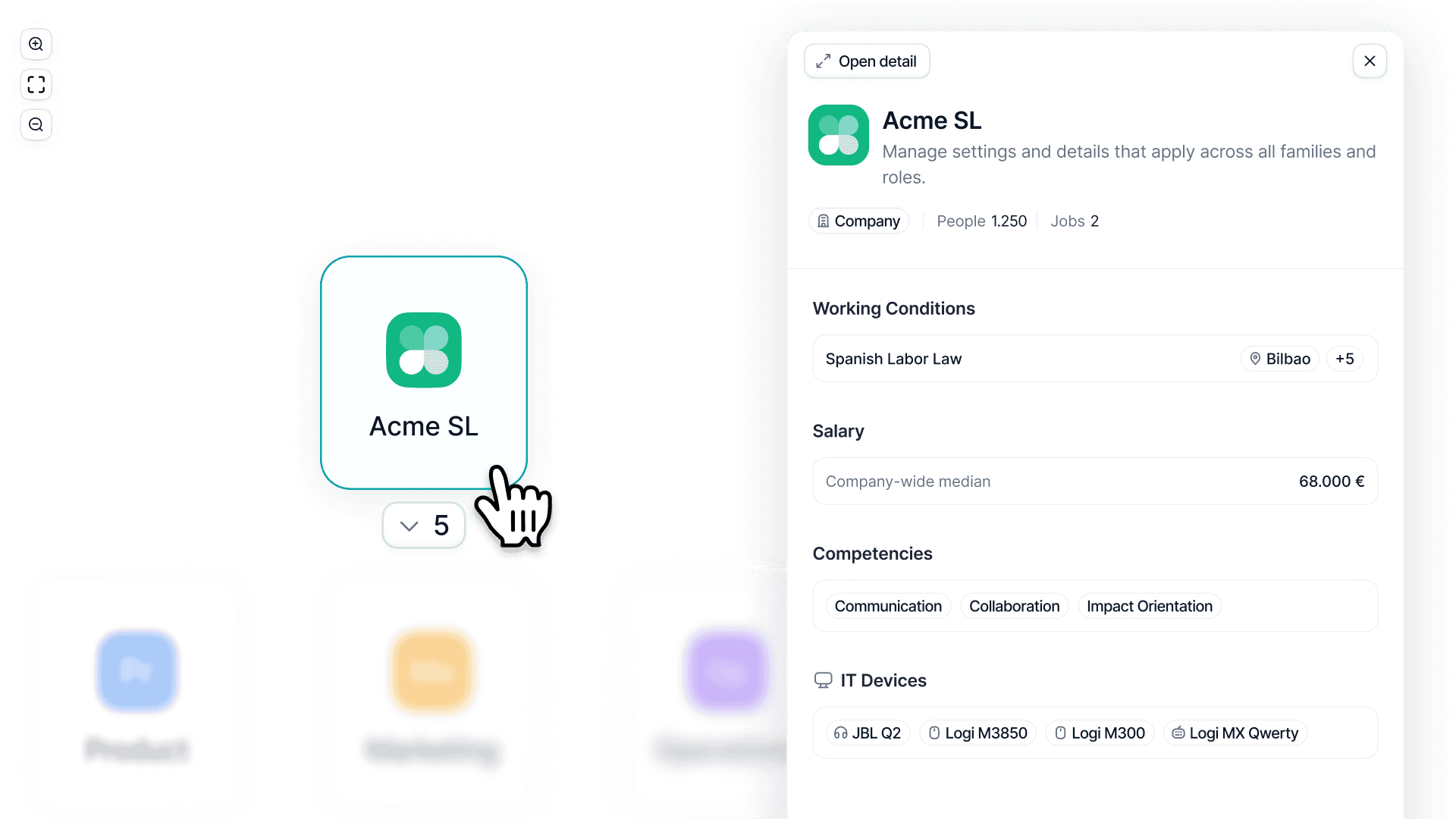
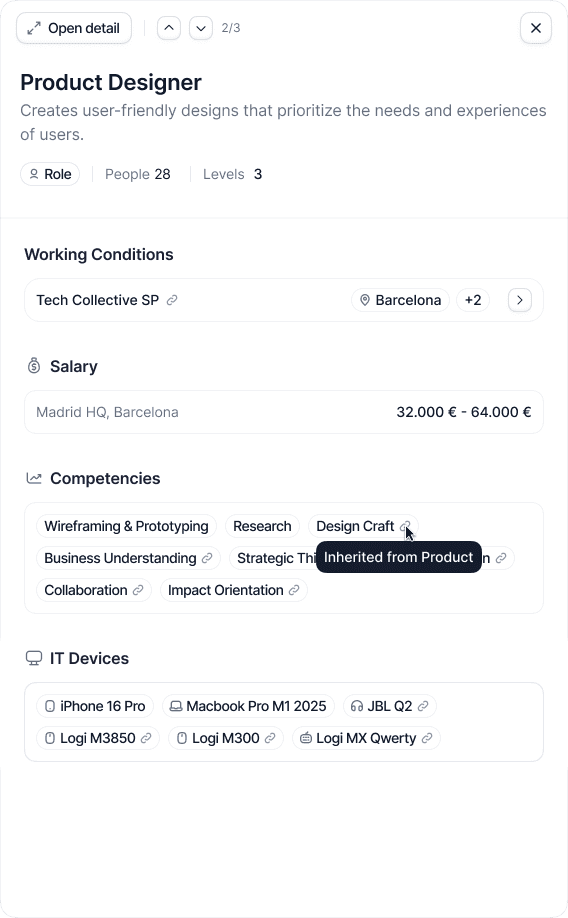
A salary band assigned to the Marketing family reaches every function and role inside it. The interface needs to show the source of that value and the people affected by a change.
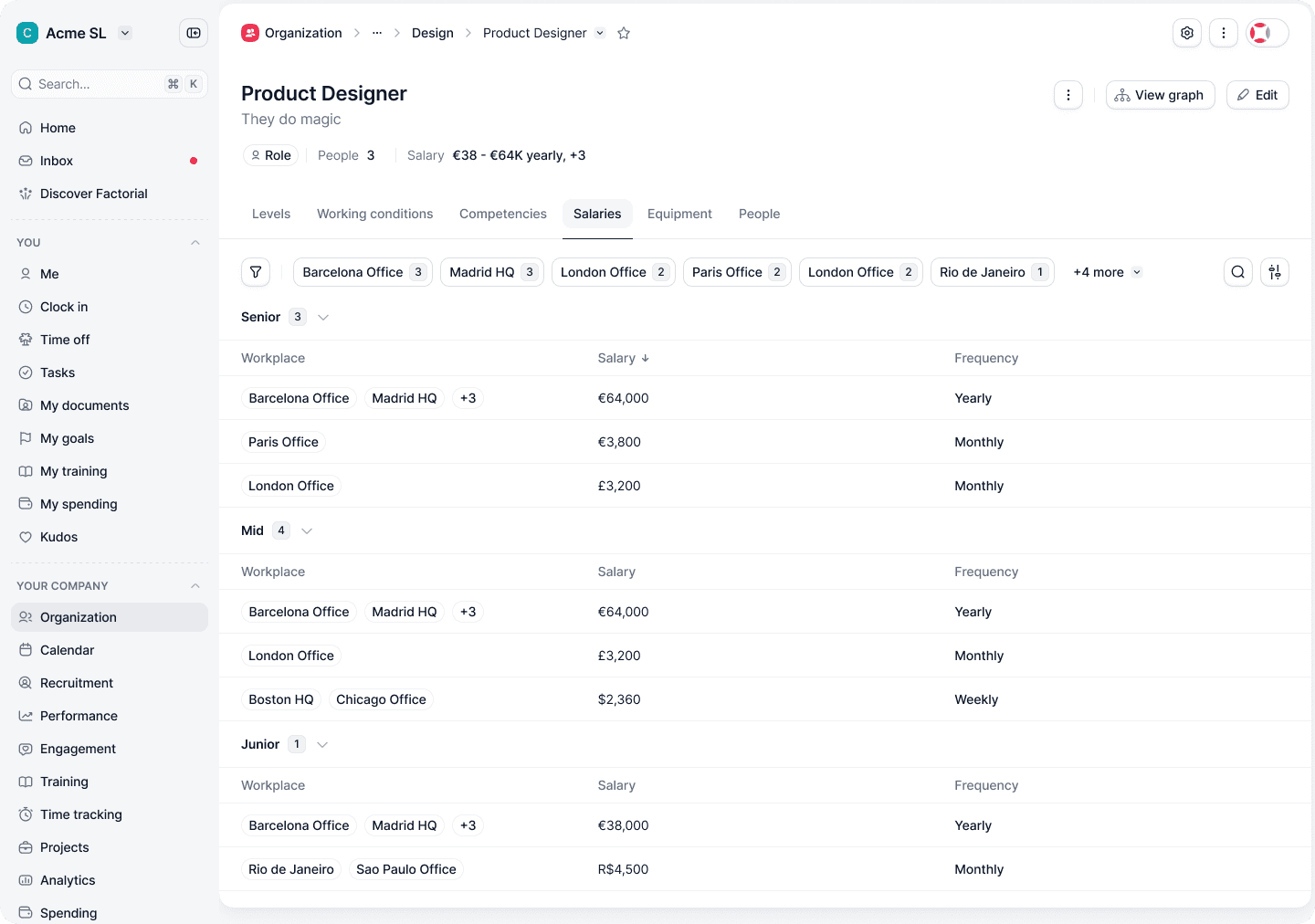
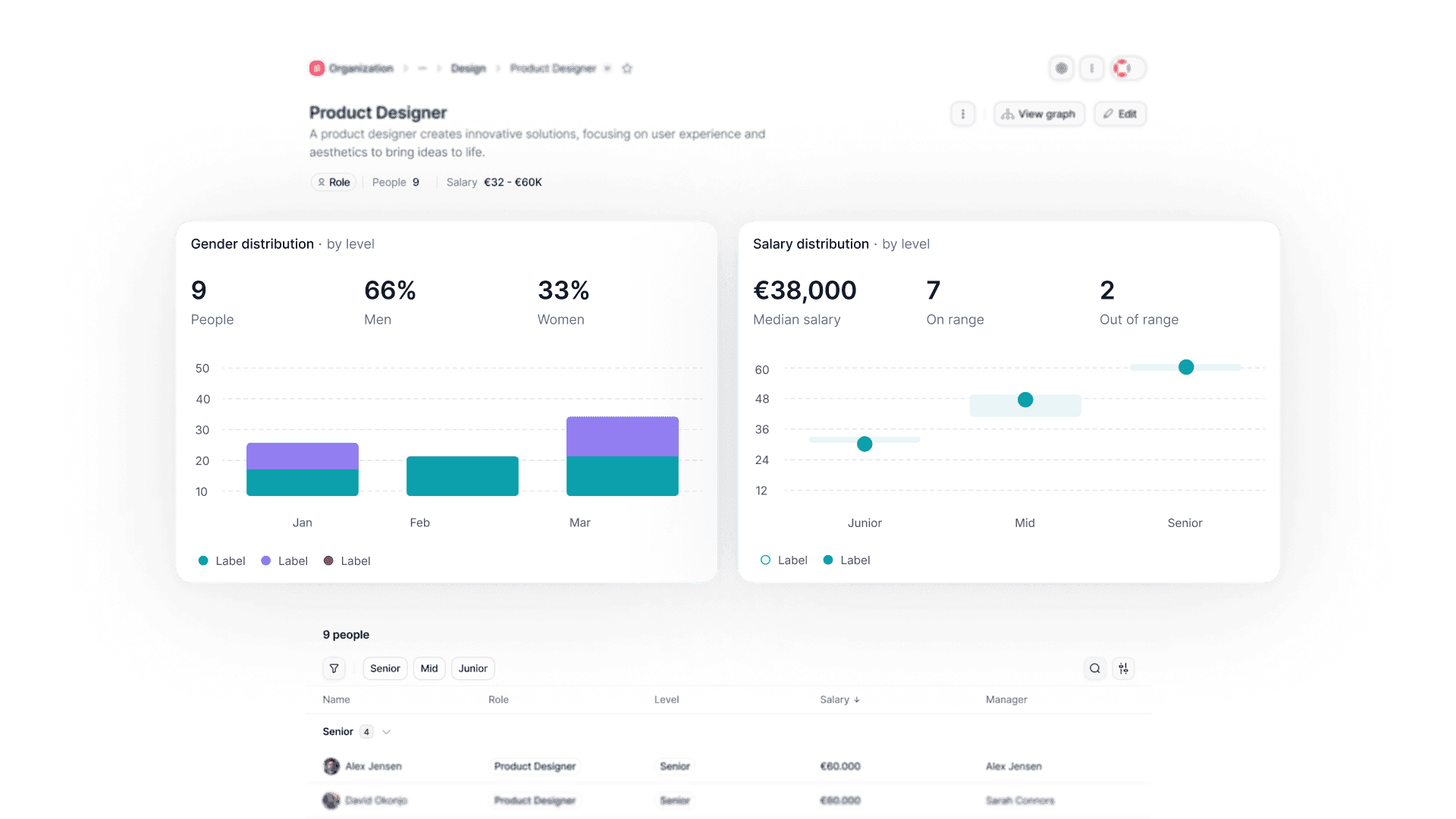
I brought inherited working conditions, salary ranges, competencies and devices into a side panel, keeping the organisational graph in view. The full-page experience separates configuration from people analytics, with headcount, gender distribution and salary ranges available in context.
Learning & iteration
The first failure was in onboarding
The beta exposed a gap in our explanation of the model. People importing a CSV skipped parent rows because they expected the system to infer the structure. Improving an error message alone would leave that expectation intact.
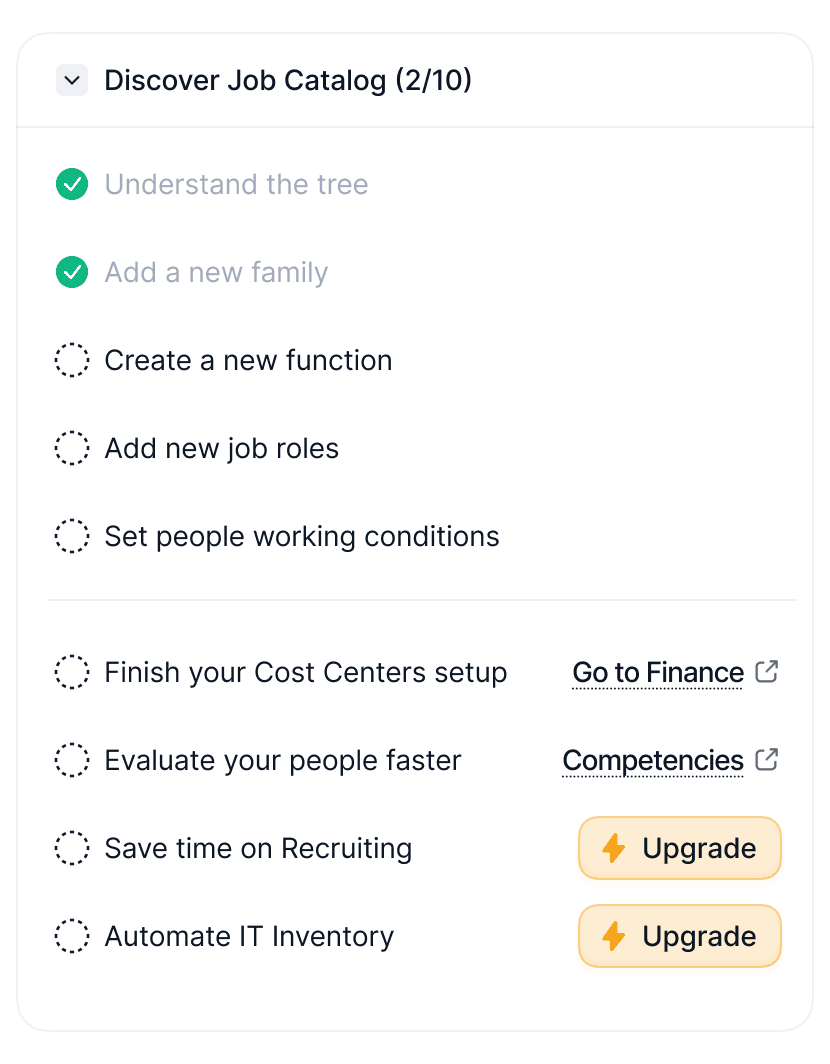
We introduced a contextual guide alongside the graph: understand the tree, create a family, add functions, then configure conditions. Catalog setup completion increased from 23% to 71% after the guided checklist.
The structure also had to survive reorganisations. Beta feedback led us to invest in drag and drop so users could move nodes between families and functions without rebuilding their catalog.
Outcomes & tradeoffs
Less recurring work, with a tradeoff
For companies that completed setup, the catalog reduced the time needed to configure performance reviews by 65% and brought employee onboarding time from seven minutes to three.
This work depended on close collaboration with Product, Engineering, Customer Success and HR specialists. Customer feedback, implementation costs and technical constraints shaped the decisions throughout.
The three-tier model works well for large companies with formal structures. Smaller companies can face more setup work than the automation saves. The next challenge is a simpler mode that gives those companies the same benefits without requiring a formal job architecture.