

Billionhands
Designing how people create with a model: suggestions when they need a starting point, control over what becomes their opinion.
The challenge
Turn community taste into something useful
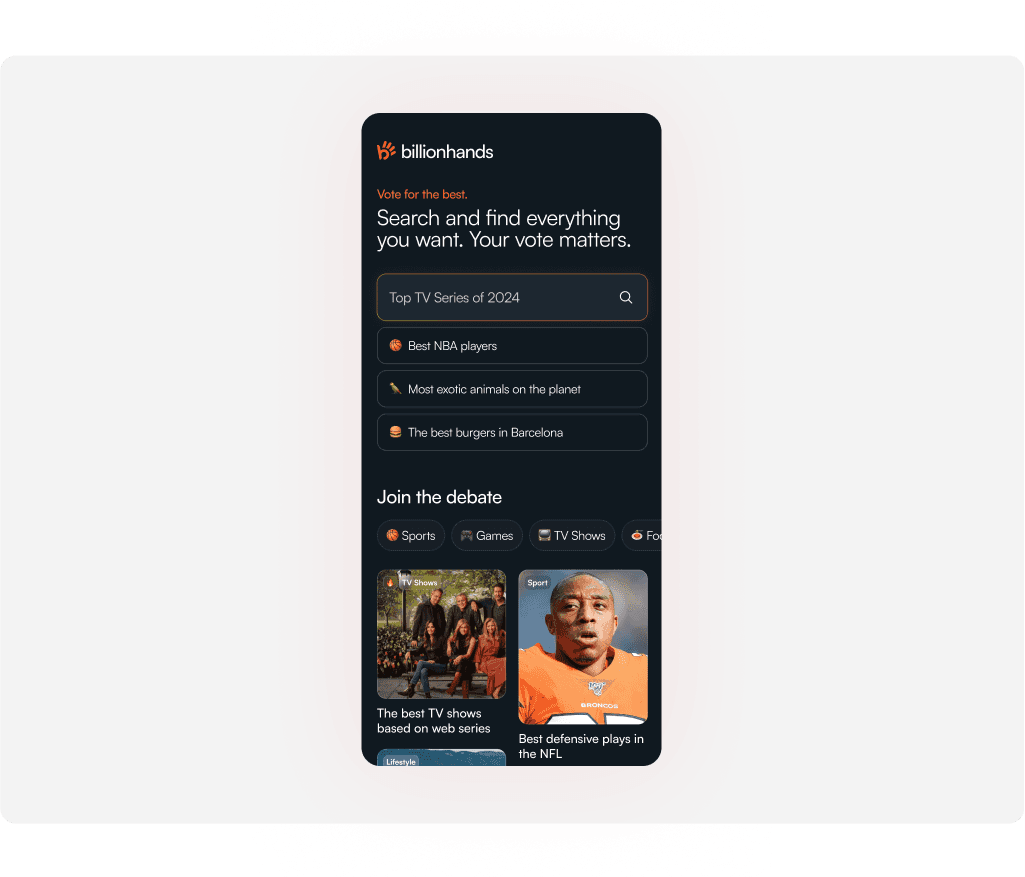
Billionhands set out to turn community taste into rankings people could create, search and share. I led the design team from the first product decisions through the MVP, working across the creation flow, community voting and AI assistance.
The central question was where a model could help without making the result feel less personal. A generated list can be useful to read, yet still feel wrong to share under your own name.
Research
Participation mattered as much as discovery
We interviewed 24 users about how they discover and trust rankings. People wanted to understand how a ranking was formed, contribute their own judgement and share in the conversations they already had.
That made authorship a product requirement. We needed to consider whether people would stand behind a result, as well as whether they would interact with it.
The approach
Design the handoff between model and person
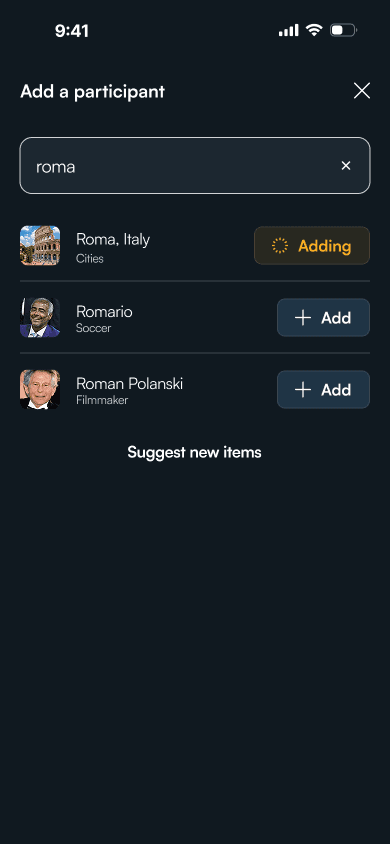
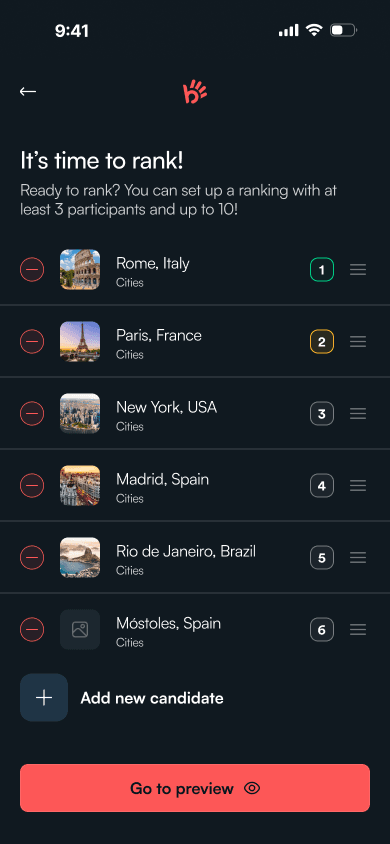
The creation loop let someone start a list, request candidates for a category, reorder or remove suggestions, invite community votes and share. The model helped with the empty page. The person decided what belonged in the list and in what order.
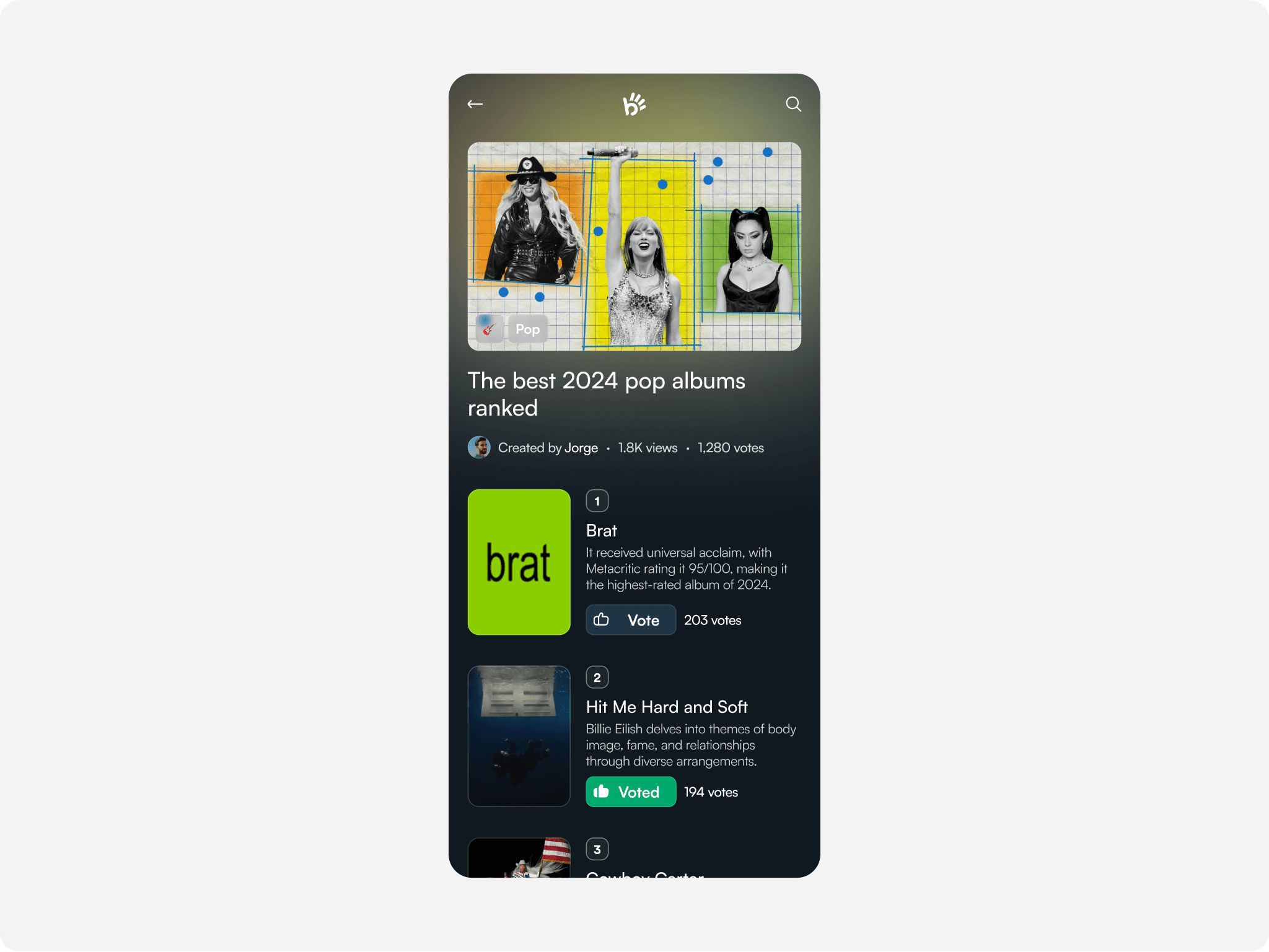
The MVP connected list creation, AI-assisted ranking and community voting. Each part had a distinct role: suggestions gave people material to work with, editing gave them ownership, and voting opened that judgement to others.


Iteration
Evaluate whether people make the result their own
Early feedback showed that people engaged with AI-generated rankings but hesitated to endorse or share them. Human-only lists grew quickly and outperformed AI-assisted lists on shares and comments.
Human-curated lists recorded 4.1 times the engagement of AI-only rankings. The reported results also showed 47% of lists being shared externally within 24 hours of creation.
We made the choice between human and AI-assisted modes explicit. People could decide when to ask for help, and readers could see what kind of list they were looking at.
Takeaway
The model’s role is a design decision
Our initial assumption gave AI the larger role and asked people to refine its output. The evidence pushed us toward assistance on demand, with human judgement at the centre.
That changed how I thought about the product. The interaction had to establish when the model enters the task, what someone can change, and when the result is ready to be shared. Making those boundaries clear was as consequential as the ranking interface itself.